
Loading...
Serving Westland, MI and surrounding areas. (734) 391-1896
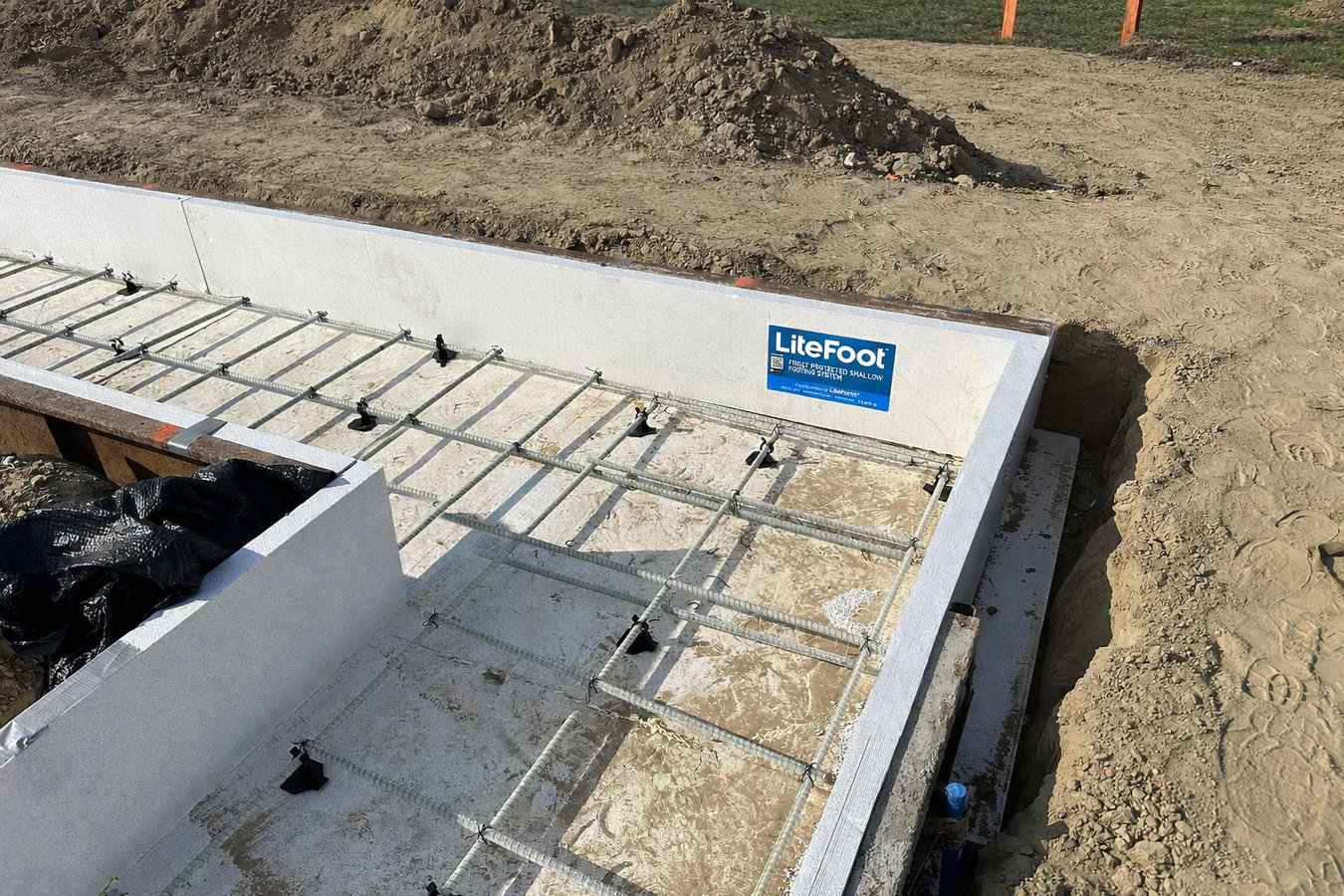
Every deck, addition, garage, and porch depends on footings that go deep enough to survive Michigan winters. We dig to the required 42 inches, pull the permits, and build the base your project needs.
Concrete footings in Westland are the buried concrete bases that hold up structures above them - decks, additions, porches, and garages - and they must be dug to at least 42 inches below the surface to stay below the frost line, where ground movement cannot reach them.
In Michigan, the frost line is not a technicality - it is the difference between a structure that stays level for 30 years and one that starts pulling away from your house after the third winter. When soil freezes, it expands. When it thaws, it contracts. A footing that sits in that movement zone will shift with it. Westland's clay-heavy soil compounds this because clay holds water and expands more aggressively than sandy soil when it freezes. Getting the depth right from the start is the one thing you cannot go back and fix later.
If your footing project is for an addition or a structure that will need its own concrete slab on grade, our foundation installation service can take the project from footings all the way through the completed foundation walls in a single coordinated build.
If you can see a gap opening up between a deck, porch, or addition and your home's exterior wall - or if doors and windows in that area have started sticking - the footing underneath may be shifting. This is common in Westland's older neighborhoods where original footings were sometimes poured too shallow to survive decades of Michigan freeze-thaw cycles. The gap will grow if left alone.
When a concrete slab or set of steps tips noticeably toward or away from the house, the footing beneath it has likely settled unevenly. In Westland's clay-heavy soil this often happens after a wet spring or a dry summer causes the ground to swell and shrink. A tilted surface is also a trip hazard, so this is worth addressing for safety alone.
Any new structure that will be attached to your home or carry significant weight needs proper footings before construction begins. This is not optional - Westland's building department will require it as part of the permit process, and skipping it puts both your investment and your home's structural integrity at risk.
If the soil around the base of a porch, garage, or addition feels soft or has settled lower than the surrounding yard, water may have eroded the soil beneath the footing. This is especially common after heavy spring rains in Wayne County, where clay soil channels water in unexpected directions. Catching it early costs far less than waiting until the structure above begins to move.
We pour concrete footings for decks, porches, room additions, detached garages, and retaining walls throughout Westland and the surrounding Wayne County area. Every footing project starts with a site visit to assess the soil, measure the area, and confirm what depth and dimensions are required. We coordinate the 811 utility-locating call before any digging starts - it is required by Michigan law - and we handle the permit application with the City of Westland so you do not have to navigate that process on your own. For projects that are part of a larger foundation build, our foundation installation service takes the project from initial footing through completed walls on a single timeline.
We also handle footing repair and replacement for existing structures in Westland's older neighborhoods where original footings were poured to pre-1980 standards that no longer meet current depth requirements. If you are adding onto a home built in the 1950s or 1960s, we assess the existing footings as part of the site visit and flag anything that needs attention before your new build begins. For properties where footing work connects to broader structural concerns, our foundation raising team can address settlement issues at the same time.
Best for homeowners adding outdoor living space - sized and placed to meet current Michigan depth requirements.
Suited to room additions and detached garages where the footing must carry significant structural load through Michigan winters.
For existing structures in Westland's older neighborhoods where original footings have failed or no longer meet current depth standards.
Designed for retaining walls that need a below-grade base to stay stable against Westland's freeze-thaw pressure and clay soil movement.
Michigan's required footing depth is 42 inches below grade - one of the deeper requirements in the country. That number exists because Westland winters are hard enough to freeze the ground well below the surface, and any footing sitting in that frozen zone will move when the ground moves. Most of Westland was developed between the 1950s and 1970s when building codes were less strictly enforced, which means a significant number of older structures in this city sit on footings that were poured too shallow. If you are adding onto a home from that era, you are almost certainly looking at new footings built to today's standards. For specific requirements before your project begins, the Michigan Department of Licensing and Regulatory Affairs oversees the building codes that apply across the state.
Wayne County clay soil adds another layer of complexity. Clay expands when it absorbs water and contracts when it dries - a cycle that puts ongoing lateral pressure on anything buried in it. A well-designed footing accounts for soil type, not just depth. Homeowners in neighboring communities like Dearborn Heights and Wayne face the same soil conditions, and the question of whether your contractor actually looked at the ground before quoting is one of the most important things you can ask.
We reply within one business day. We will ask what you are building, where on your property it sits, and whether permits have been discussed. Most footing projects need a site visit before we can give you a reliable number.
We visit your property to assess the soil, measure the area, and confirm the required depth. In Westland, a building permit is required for footing work - we handle that application. An inspector will review the excavation before the pour, which protects you by getting an independent set of eyes on the work while it is still fixable.
Before any digging starts we coordinate 811 to locate underground utilities - gas, water, electrical, cable. This is required by Michigan law and protects your property. The crew then digs to the required depth - at least 42 inches in Westland - and sets forms. The inspector reviews the excavation at this stage before we proceed.
Once the inspection is approved, concrete is poured and the forms are left in place while it cures. In warm Michigan weather, plan for at least one week before any framing or building begins on top. We remove forms, backfill the site, and walk you through what comes next - whether that is our crew continuing or another trade picking up from here.
Free written estimate. We handle permits and the city inspection. No surprises once work starts.
(734) 391-1896Michigan requires footings to reach at least 42 inches below grade. We dig to that depth on every project because it is the single factor that determines whether your structure stays level through Westland winters. A cheaper quote that assumes a shallower hole is not a savings - it is a future repair.
We assess soil conditions on every site before we quote anything. Westland's clay-heavy ground behaves differently than sandy soil, and footings sized for the wrong conditions will show it. That site-specific knowledge comes from working across Wayne County, not from a standard spec sheet. The American Concrete Institute's guidance on concrete placement - available at concrete.org - is part of how we approach every project.
We pull the permit from the City of Westland and schedule the pre-pour inspection. Permitted and inspected structural work is on record, which protects your home's value when you sell and protects you from any question about whether the work was done correctly.
We coordinate the 811 call to locate underground utilities before any excavation begins on every project - no exceptions. Michigan law requires it, and skipping it creates real risk to gas lines, electrical, and water service. It is a non-negotiable step that takes a couple of days and protects everyone on your property.
Getting a footing right means doing several things correctly before the concrete is ever poured. These four commitments - depth, soil assessment, permits, and utility marking - are the difference between a structure that stays put and one that shifts in the first hard winter.
For structures that have already settled - raises and stabilizes foundations before further movement occurs.
Learn MoreTakes footing work through to completed foundation walls for additions, garages, and new structures.
Learn MoreFree on-site estimate, written quote, permits handled. Reach out now and we will hold your spot before the spring rush.